
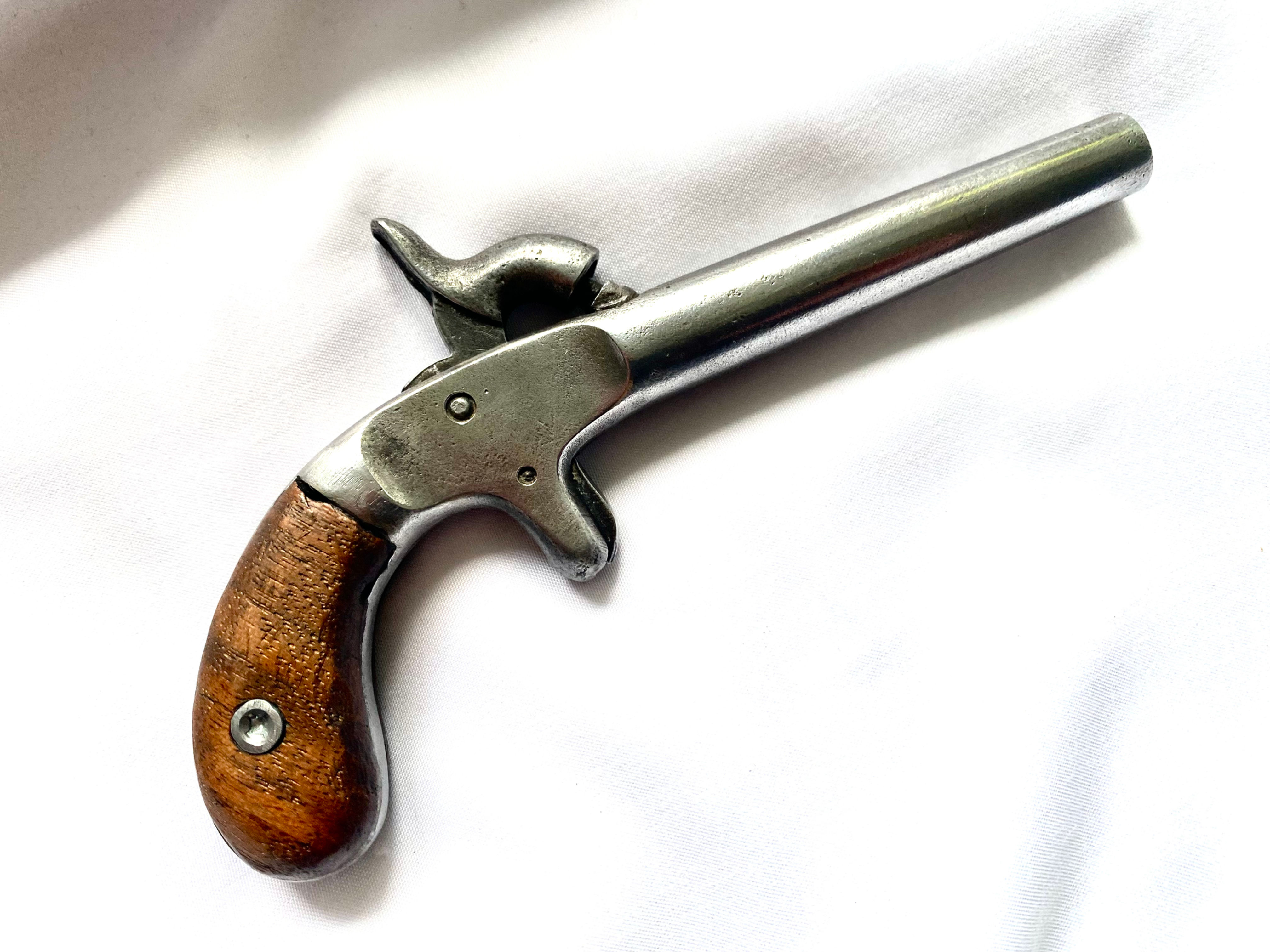

A small, single-shot pistol with a percussion mechanism. The weapon features a rounded wooden grip screwed onto a metal stock. The barrel is straight and cylindrical in cross-section. The hammer, massive and curved, is external and operates a nipple designed to receive a priming cap.
Historical context
The percussion pistol represents a major evolution in 19th-century firearms. Replacing flintlock systems, this more reliable mechanism was widely used between 1820 and 1880. Compact models were popular for personal defense and discreet carry.
Liège region (Belgium)
Constituent elements
• Barrel: steel, smoothbore, medium length
• Plate/frame: steel, compact shape
• Dog: external, forged steel
• Trigger: integrated into the frame
• Handle: wood (probably walnut), ergonomic
Manufacturing techniques
• Percussion mechanism (capsule)
• Machined and fitted metal parts
• Assembly using metal screws
Dimensions
• Total length: ~15 cm
Markings and inscriptions
• No visible markings
• No apparent hallmarks or manufacturer's signature
Satisfactory state of preservation
• Metal: uniform patina, signs of wear and slight oxidation
• Wood: small crack at the handle indicating normal wear and tear of over 100 years
• Structure: complete
Function and use
• Personal defense weapon
• Civilian use (personal protection, travel)
• Single-shot firing with manual reloading using black powder and ball
Origin and attribution
• Probable origin: North America
• Possible production centers:
• Liège region (Belgium)
